

How To Draw A Dragon Curve

Dragon Curve
A dragon curve is a recursive nonintersecting curve whose proper name derives from its resemblance to a certain mythical creature.

The curve tin can exist constructed by representing a left turn by 1 and a right plough by 0. The first-order curve is and then denoted 1. For higher lodge curves, append a one to the finish, and so suspend the string of preceding digits with its middle digit complemented. For example, the second-order curve is generated as follows:  , and the tertiary as
  .
.
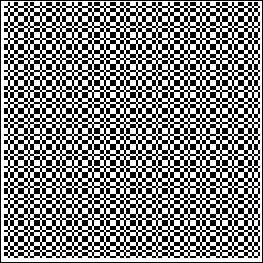
Continuing gives 110110011100100... (OEIS A014577), which is sometimes known every bit the regular paperfolding sequence and written with  s instead of 0s (Allouche and Shallit 2003, p. 155). A recurrence plot of the limiting value of this sequence is illustrated to a higher place.
Representing the sequence of binary digits 1, 110, 1101100, 110110011100100, ... in octal gives 1, 6, 154, 66344, ...(OEIS A003460; Gardner 1978, p. 216).
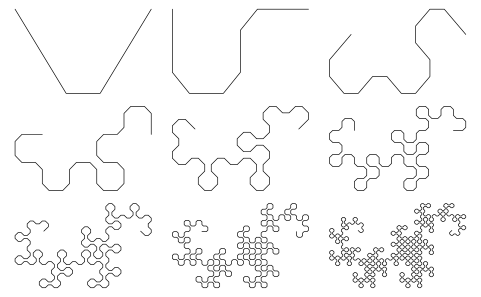
This procedure is equivalent to drawing a right angle and afterward replacing each right bending with another smaller right bending (Gardner 1978). In fact, the dragon curve tin can be written as a Lindenmayer organization with initial cord "FX", string rewriting rules "X" -> "X+YF+", "Y" -> "-FX-Y", and angle  . The dragon curves of orders i to nine are illustrated above, with corners rounded to emphasize the path taken by the curve.
See also
Douady's Rabbit Fractal, Lindenmayer System, Peano Curve
Explore with Wolfram|Alpha
References
Allouche, J.-P. and Mendès France, M. "Automata and Automated Sequences." In Across Quasicrystals (Ed. F. Axel et al.). Berlin: Springer-Verlag, pp. 293-367, 1994. Allouche, J.-P. and Shallit, J. "Example v.one.half dozen (The Regular Paperfolding Sequence)." Automatic Sequences: Theory, Applications, Generalizations. Cambridge, England: Cambridge University Printing, pp. 155-156, 2003. Bulaevsky, J. "The Dragon Curve or Jurassic Park Fractal." http://ejad.best.vwh.cyberspace/coffee/fractals/jurasic.shtml. Charpentier, 1000. "L-Systems in PostScript." http://www.cs.unh.edu/~charpov/Programming/50-systems/. Dickau, R. Chiliad. "Ii-Dimensional Fifty-Systems." http://mathforum.org/advanced/robertd/lsys2d.html. Dixon, R. Mathographics. New York: Dover, pp. 180-181, 1991. Dubrovsky, V. "Nesting Puzzles, Part I: Moving Oriental Towers." Breakthrough six, 53-57 (Jan.) and 49-51 (February.), 1996. Dubrovsky, V. "Nesting Puzzles, Part II: Chinese Rings Produce a Chinese Monster." Quantum half-dozen, 61-65 (Mar.) and 58-59 (Apr.), 1996. Gardner, M. Mathematical Magic Show: More Puzzles, Games, Diversions, Illusions and Other Mathematical Sleight-of-Listen from Scientific American. New York: Vintage, pp. 207-209 and 215-220, 1978. Lauwerier, H. Fractals: Endlessly Repeated Geometric Figures. Princeton, NJ: Princeton University Press, pp. 48-53, 1991. Mandelbrot, B. B. The Fractal Geometry of Nature. New York: W. H. Freeman, pp. 66-67, 1983. Peitgen, H.-O. and Saupe, D. (Eds.). The Scientific discipline of Fractal Images. New York: Springer-Verlag, p. 284, 1988. Sloane, North. J. A. Sequences A003460/M4300 and A014577 in "The On-Line Encyclopedia of Integer Sequences." Vasilyev, Due north. and Gutenmacher, Five. "Dragon Curves." Quantum 6, 5-x, 1995. Wells, D. The Penguin Lexicon of Curious and Interesting Geometry. London: Penguin, p. 59, 1991.
Referenced on Wolfram|Alpha
Dragon Curve
Cite this equally:
Weisstein, Eric W. "Dragon Curve." From MathWorld--A Wolfram Web Resource. https://mathworld.wolfram.com/DragonCurve.html
Subject area classifications

Source: https://mathworld.wolfram.com/DragonCurve.html
Posted by: zielinskithencerest1951.blogspot.com
0 Response to "How To Draw A Dragon Curve"
Post a Comment